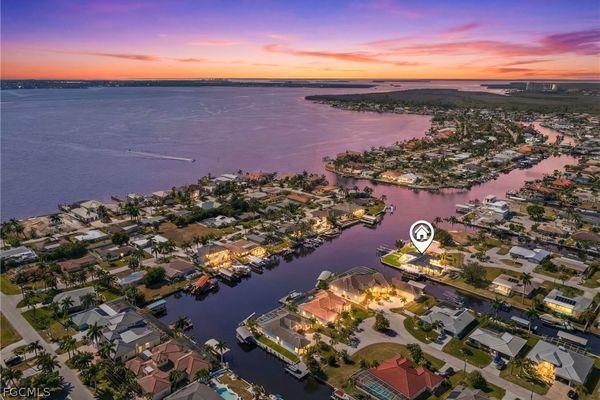
Cape Coral is one of Southwest Florida’s most remarkable success stories. Located across the Caloosahatchee River from Fort Myers, Cape Coral was largely undeveloped wilderness until 1957 when Baltimore developers Leonard and Jack Rosen purchased more than 100 square miles of land known as Redfish Point. Through their company, Gulf American Land Corporation, the brothers envisioned creating a master-planned waterfront community unlike anything else in the United States. Their ambitious project would eventually become one of Florida’s largest cities and one of the most recognizable waterfront communities in the country.
The Rosen brothers marketed Cape Coral as a “Waterfront Wonderland” and began an enormous engineering effort to transform wetlands and scrubland into buildable neighborhoods. Hundreds of miles of canals were dredged, creating waterfront property throughout the city while simultaneously providing fill material to elevate building sites. Over time, more than 400 miles of canals were constructed, giving Cape Coral more navigable waterways than any other city in the world. The first residents arrived in 1958, and growth accelerated rapidly throughout the 1960s as buyers from northern states were attracted by affordable waterfront living and Florida’s warm climate.
Learn more about Cape Coral’s official government services at City of Cape Coral. Additional historical information can be found at the Cape Coral Museum of History.

From Planned Community to Major Florida City
Cape Coral was officially incorporated in 1970 and has continued to grow at an impressive pace ever since. The opening of the Cape Coral Bridge in 1964 dramatically improved access to Fort Myers and accelerated residential and commercial development. What began as a retirement-focused community gradually evolved into a diverse city with thriving neighborhoods, schools, healthcare facilities, shopping centers, parks, and businesses. Today, Cape Coral is among the largest cities in Florida by land area and is home to more than 200,000 residents.
Modern Cape Coral balances growth with environmental stewardship and recreation. Residents enjoy boating, fishing, kayaking, golf courses, nature preserves, and easy access to Gulf Coast destinations including Fort Myers Beach, Sanibel Island, and Pine Island. While the city continues to expand with new residential and commercial projects, its extensive canal system remains its defining feature and a reminder of the bold vision that transformed a sparsely populated peninsula into one of Southwest Florida’s most desirable places to live.