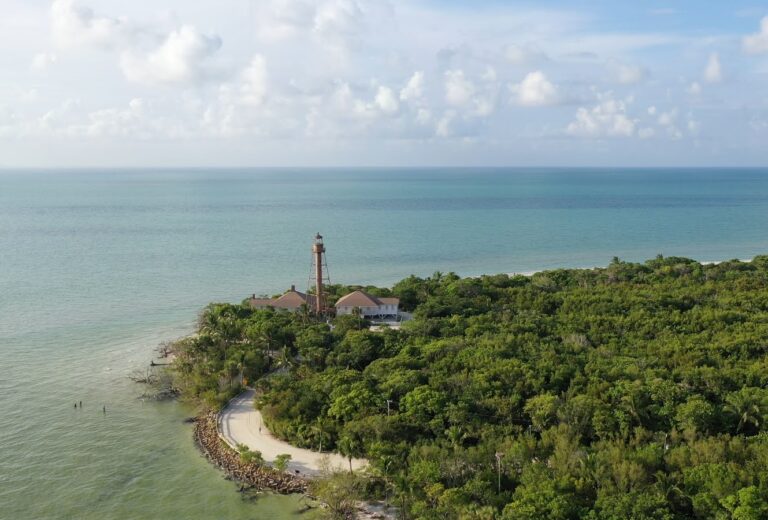
The Story of the Sanibel Island Lighthouse
Standing at the eastern tip of Sanibel Island, the Sanibel Island Lighthouse has welcomed boaters, travelers, and island residents for well over a century. With its distinctive iron skeletal tower and beautiful Gulf Coast setting, the lighthouse is one of Southwest Florida’s most recognizable historic landmarks and a symbol of the island’s resilience through storms, change, and time.
A Lighthouse Born From Maritime Need
In the late 1800s, shipping traffic through the waters surrounding Sanibel Island increased dramatically. The area’s shallow reefs, sandbars, and changing channels made navigation dangerous for vessels traveling along Florida’s Gulf Coast. To improve safety for mariners entering the harbor near Fort Myers and the nearby Caloosahatchee River, the United States government approved construction of a lighthouse on Sanibel Island.
The Sanibel Island Lighthouse was first illuminated on August 20, 1884. Unlike many traditional brick lighthouses found along the East Coast, Sanibel’s lighthouse was built using a skeletal iron framework. This open design allowed strong coastal winds and hurricanes to pass through the structure more easily, helping it survive severe weather
The original lighthouse complex included the tower itself, keeper’s quarters, a boat house, and several support buildings. Lighthouse keepers and their families lived on-site, maintaining the light every night to guide ships safely through the region’s waters.
A Unique Design
One of the most distinctive features of the Sanibel Island Lighthouse is its skeletal construction. Rising approximately 98 feet tall, the lighthouse consists of a central iron column surrounded by a lattice-like framework. This engineering style was relatively rare compared to masonry lighthouse towers and remains one of the structure’s defining visual characteristics today.
The lighthouse originally used an oil lamp with a Fresnel lens system to project its beam across the Gulf waters. Over time, technological upgrades modernized the beacon, eventually transitioning to automated lighting systems that reduced the need for full-time lighthouse keepers.
Today, the lighthouse remains an active navigational aid managed by the United States Coast Guard.
Surviving Hurricanes and Harsh Conditions
Living on a barrier island means enduring the constant forces of nature, and the Sanibel Island Lighthouse has survived countless tropical storms and hurricanes throughout its history. Salt air, heavy winds, storm surge, and flooding have all tested the durability of the structure.

One of the most significant modern challenges came when powerful Hurricane Ian struck Southwest Florida 2022, causing extensive damage across the region. Despite severe impacts to surrounding areas, the lighthouse itself endured and continued to stand as a symbol of the island’s strength and perseverance.
The surrounding lighthouse grounds and fishing pier have undergone repairs and restoration efforts over the years to preserve the area for future generations.
Lighthouse Park and Visitor Experience
Today, visitors can explore the grounds surrounding the lighthouse at Lighthouse Beach Park, one of the island’s most popular public beaches. The park offers scenic shoreline views, fishing opportunities, picnic areas, walking paths, and excellent shelling along the Gulf Coast beaches that Sanibel is famous for.
While the interior of the lighthouse tower is generally not open for public climbing, visitors can walk near the structure and enjoy photographs of this historic landmark framed by palm trees, sea oats, and Gulf waters.
The area is especially beautiful during sunrise, when the morning light reflects off the water and silhouettes the lighthouse against the sky.
An Enduring Symbol of Sanibel Island
For residents and visitors alike, the Sanibel Island Lighthouse represents more than just maritime history. It reflects the island’s identity — peaceful, resilient, historic, and closely connected to the sea.
Over the decades, the lighthouse has appeared in countless photographs, paintings, postcards, and travel publications. It remains one of the most beloved landmarks in Southwest Florida and continues to attract visitors from around the world who come to experience the charm and natural beauty of Sanibel Island.
Whether admired from the beach, photographed at dawn, or appreciated as a piece of Florida history, the Sanibel Island Lighthouse continues to shine as a lasting reminder of the island’s maritime heritage.