Long before McGregor Boulevard became one of the most recognizable roads in Fort Myers, it served a much different purpose. During the late 1800s and early 1900s, the route followed by today’s boulevard was part of a network of trails used by Florida cattlemen. Vast herds of cattle were driven across Southwest Florida from inland ranches toward shipping points along the Caloosahatchee River. Cowboys on horseback guided thousands of head of cattle through open pine flatwoods, marshes, and prairies that once covered much of Lee County. These cattle drives were an important part of Florida’s early economy and helped establish Fort Myers as a regional center for trade and transportation.
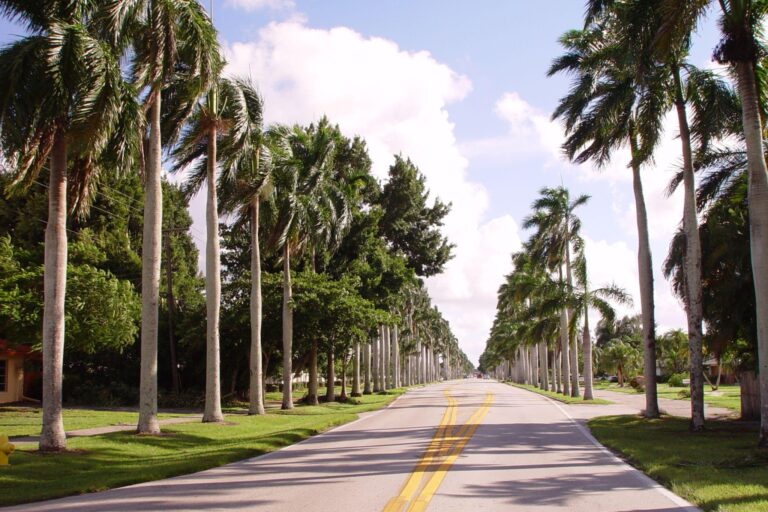
As Fort Myers grew, the rough cattle trail gradually transformed into a more developed roadway. In the early 1900s, prominent winter residents Thomas Edison and Henry Ford helped promote improvements throughout the area. McGregor Boulevard eventually became known for its beautiful double rows of Royal Palm trees, many of which were planted beginning in 1915. The towering palms created a grand entrance into the city and remain one of Fort Myers’ most iconic sights today. While modern traffic has replaced herds of cattle, the roadway still follows a path shaped by the region’s frontier past.

The cattle drives that once crossed the Fort Myers area were rugged journeys that could last for days. Florida’s “cracker cowboys” developed their own unique culture, using long whips, horses, and working dogs to move cattle across difficult terrain. Many of these early ranching families helped build the agricultural foundation of Southwest Florida. Although urban development has transformed much of the landscape, traces of this heritage remain throughout Lee County, where ranching continues to play a role in the local economy.
Today, McGregor Boulevard connects neighborhoods, parks, and attractions while serving as a living reminder of Fort Myers’ evolution. Travelers driving beneath the canopy of Royal Palms may not realize they are following a route that once echoed with the sounds of cattle hooves and cracking whips. From its beginnings as a cattle trail to its status as one of Southwest Florida’s most scenic drives, McGregor Boulevard reflects the remarkable transformation of Fort Myers from a frontier settlement into the vibrant community visitors and residents enjoy today.
The cattle drives that once crossed the Fort Myers area were rugged journeys that could last for days. Florida’s “cracker cowboys” developed their own unique culture, using long whips, horses, and working dogs to move cattle across difficult terrain. Many of these early ranching families helped build the agricultural foundation of Southwest Florida. Although urban development has transformed much of the landscape, traces of this heritage remain throughout Lee County, where ranching continues to play a role in the local economy.
Today, McGregor Boulevard connects neighborhoods, parks, and attractions while serving as a living reminder of Fort Myers’ evolution. Travelers driving beneath the canopy of Royal Palms may not realize they are following a route that once echoed with the sounds of cattle hooves and cracking whips. From its beginnings as a cattle trail to its status as one of Southwest Florida’s most scenic drives, McGregor Boulevard reflects the remarkable transformation of Fort Myers from a frontier settlement into the vibrant community visitors and residents enjoy today.