Stretching from Venice south to Naples, Southwest Florida is home to some of the most beautiful barrier islands in the United States. These islands were formed by centuries of wave action and shifting sands, creating a natural shield between the Gulf of Mexico and the mainland. Today they offer a unique combination of pristine beaches, wildlife habitat, boating opportunities, fishing, shelling, and charming coastal communities. From the shark-tooth beaches of Venice to the white-sand shores of Marco Island, each barrier island has its own personality and appeal.
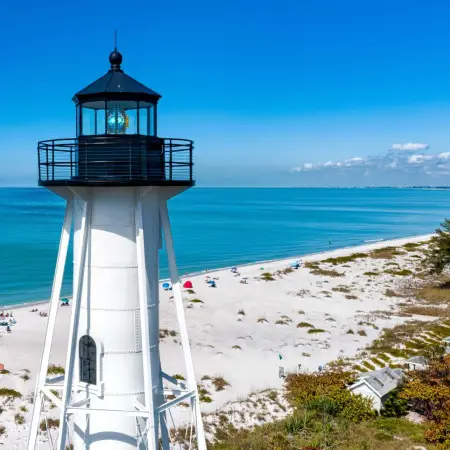
The northernmost barrier islands in this region include Casey Key, Manasota Key, and Gasparilla Island. Casey Key is known for its quiet residential atmosphere and scenic Gulf views. Manasota Key offers laid-back beaches and excellent shelling opportunities. Farther south, Gasparilla Island is home to the historic village of Boca Grande and the famous Port Boca Grande Lighthouse. The island remains one of Florida’s most picturesque coastal destinations and is part of a chain of Gulf Coast barrier islands.
Continuing south, the barrier islands surrounding Charlotte Harbor include Cayo Costa, North Captiva Island, Captiva Island, and Sanibel Island. Cayo Costa remains largely undeveloped and is accessible only by boat, preserving a glimpse of Old Florida. North Captiva is similarly secluded, while Captiva Island attracts visitors with its colorful village atmosphere, waterfront dining, and spectacular sunsets. Captiva and Sanibel were once a single landmass before natural erosion separated them into two islands thousands of years ago.
Sanibel Island has long been known as a “Barrier Island Sanctuary,” famous for its shell-covered beaches, bicycle paths, and extensive wildlife habitat. More than two-thirds of the island is protected through conservation lands and the J.N. “Ding” Darling National Wildlife Refuge. The island’s unique east-west orientation helps collect shells from around the Gulf, making it one of the world’s premier shelling destinations.
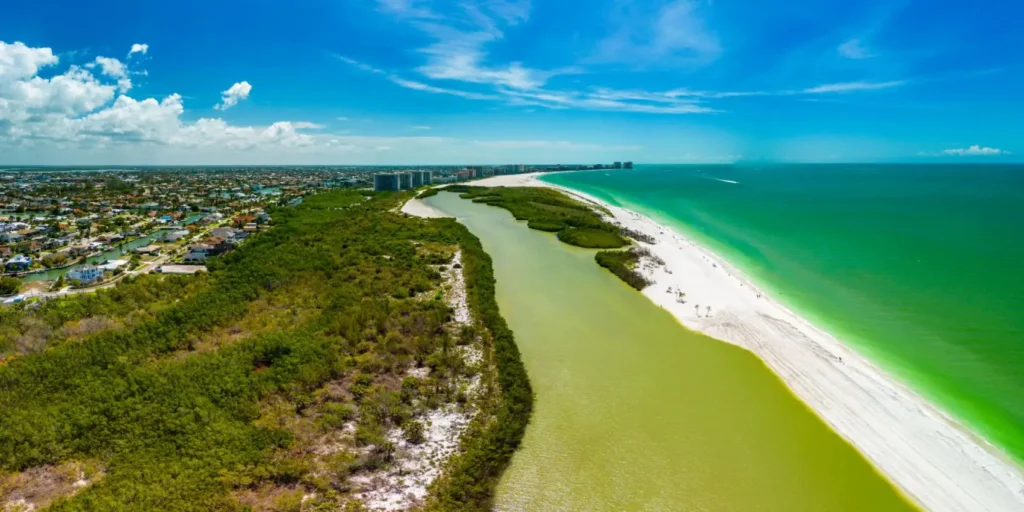
Fort Myers Beach, Bonita Springs, and Naples Barrier Islands
South of Sanibel lies Estero Island, better known as Fort Myers Beach. This narrow barrier island combines wide beaches, fishing piers, waterfront restaurants, and a lively beach-town atmosphere. At the southern end of Estero Bay, Lovers Key and Black Island form part of another barrier island system known for kayaking, wildlife viewing, and mangrove estuaries.
Continuing toward Naples, Little Hickory Island and Barefoot Beach preserve some of the region’s most natural coastal landscapes. These islands are popular with beachgoers seeking quieter stretches of shoreline and opportunities to spot dolphins, shorebirds, and sea turtles. Their protected habitats play a vital role in maintaining Southwest Florida’s coastal ecosystem.
The southernmost major barrier island in this journey is Marco Island, the largest developed island in Florida’s famed Ten Thousand Islands region. Marco Island combines luxury resorts, boating access, fishing opportunities, and beautiful Gulf beaches while serving as the gateway to the vast mangrove wilderness that extends toward the Everglades. Its unique location offers visitors a blend of modern amenities and access to one of Florida’s most remarkable natural environments.
Together, these barrier islands create a nearly continuous ribbon of beaches and coastal habitats from Venice to Naples. Whether you enjoy shelling on Sanibel, exploring Boca Grande’s historic charm, relaxing on Fort Myers Beach, or boating through the waters around Marco Island, Southwest Florida’s barrier islands offer some of the most diverse and scenic coastal experiences in the country.
Learn more about these remarkable islands through the official community resources at Sanibel & Captiva Islands Chamber of Commerce and Gasparilla Island State Park.