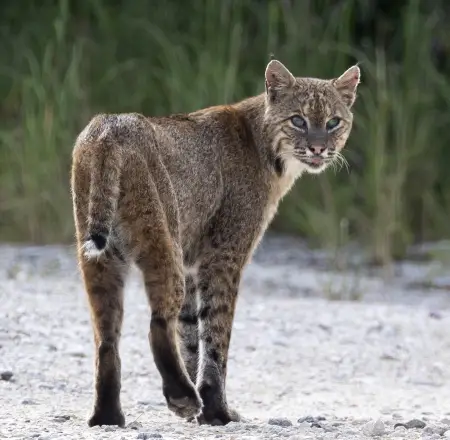
South Florida is home to some of the most fascinating wildlife in North America. Among the region’s most recognizable predators are the bobcat, the American alligator, and the endangered Florida panther. These animals occupy different habitats across the Everglades, Big Cypress National Preserve, and surrounding wilderness areas, creating one of the most unique ecosystems in the United States. Residents and visitors alike may encounter signs of these animals while hiking, boating, or exploring the natural landscapes of Southwest and South Florida.
The bobcat is the most common wild cat found throughout Florida. Smaller than a panther but larger than a domestic cat, bobcats are highly adaptable and can be found in forests, wetlands, and even suburban areas. They are generally shy and avoid human contact, hunting rabbits, rodents, birds, and other small animals. Their spotted coats and short “bobbed” tails make them easy to identify when spotted crossing a trail or roadway.
The American alligator is perhaps Florida’s most iconic reptile. These powerful predators inhabit freshwater marshes, ponds, canals, and lakes throughout South Florida. Adult alligators can exceed 12 feet in length and play a critical role in maintaining healthy wetland ecosystems. By creating “gator holes” during dry seasons, they provide water sources that benefit fish, birds, turtles, and countless other species. While alligators are common, wildlife officials recommend keeping a safe distance and never feeding them.

The Florida panther is one of the rarest mammals in North America and serves as a symbol of Florida wilderness conservation. A subspecies of cougar, the Florida panther primarily inhabits the forests and swamps of South Florida, particularly within Big Cypress National Preserve and the western Everglades. Conservation efforts over the past several decades have helped increase the population, but vehicle collisions and habitat loss remain significant threats.
Unlike bobcats, Florida panthers require large territories to survive. Adult males may roam over 200 square miles while searching for prey such as deer, wild hogs, and raccoons. Their presence indicates a healthy ecosystem capable of supporting large predators. Wildlife crossings along major highways in South Florida have become an important tool in protecting panthers and reducing vehicle-related deaths.
Together, bobcats, alligators, and Florida panthers represent the incredible biodiversity that makes South Florida special. Protecting wetlands, forests, and wildlife corridors ensures future generations can continue to experience these remarkable animals in their natural habitats. Whether viewed from a boardwalk in the Everglades or captured by a remote trail camera, these predators remain an important part of Florida’s natural heritage.
For additional information about Florida wildlife and conservation efforts, visit the Florida Fish and Wildlife Conservation Commission at https://myfwc.com and Big Cypress National Preserve at https://www.nps.gov/bicy.